
African and Caribbean Stories of Integration in Enfield (1950s–2000s)
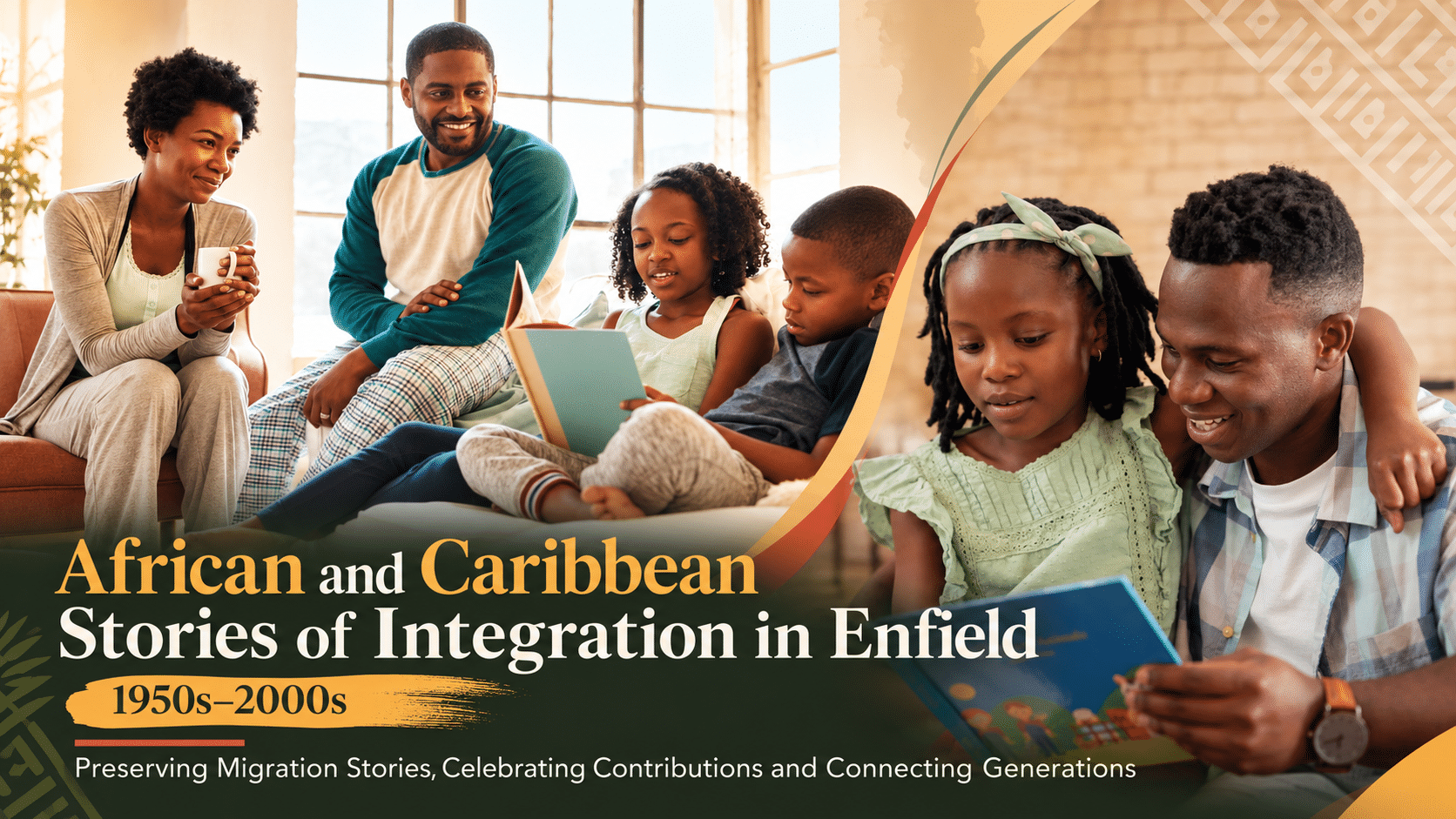
Preserving Migration Stories, Celebrating Contributions and Connecting Generations
This community heritage project, led by Diversity Rights, aims to record and preserve the experiences of African and Caribbean people who migrated to and settled in the London Borough of Enfield between the 1950s and the 2000s.
Funded by Enfield Voluntary Action with funding from the Heritage Fund, the project will use oral history interviews, exhibitions, podcasts and an illustrated e-book to capture how people arrived, built their lives and helped shape the borough, in their own words.
If you or a family member have memories of migration and settlement in Enfield, you can share your story, volunteer or contribute photographs and historical documents.
This page explains why these stories need recording, the themes the project will explore, its planned activities, who can participate and how the heritage materials will be preserved for future generations.
Many of Enfield's Migration Stories Have Never Been Recorded
African and Caribbean communities have contributed to Enfield’s development over several generations. From the post-war years onwards, people came to Britain for employment, education, family reunification and, in some cases, safety from political instability or conflict.
The Windrush generation is particularly associated with Caribbean people who migrated to Britain during the post-war decades. The name comes from HMT Empire Windrush, which arrived at Tilbury in June 1948. The government’s Windrush Scheme has broader eligibility, covering qualifying people from African and other Commonwealth countries as well as the Caribbean (Home Office, n.d.).
Caribbean and African migration took place in different historical, political and legal circumstances. The project will recognise these differences while exploring experiences shared by both communities, including discrimination, housing difficulties, economic hardship and barriers to public services.
Many migrants also built successful careers, raised families, established businesses and community organisations, and maintained their cultural traditions while adapting to life in Britain.
However, many personal accounts of these experiences remain undocumented or are insufficiently represented in local heritage collections.
In September 2025, Diversity Rights consulted more than 70 African residents in Enfield through community outreach and discussions. Approximately 90% expressed strong interest in contributing to activities documenting migration experiences.
Building on this consultation, the project will undertake targeted outreach to Caribbean residents, older people and community organisations to encourage their participation and ensure that their experiences are represented.
Many first-generation migrants are now in later life, making the recording and preservation of their memories increasingly important.

Six Themes Will Shape the Migration Stories
The project will explore migration and integration experiences across several decades, recognising both the differences and connections between African and Caribbean communities.
Why People Left and What They Found on Arrival
Participants will describe why they left their countries of origin, how they travelled to Britain and what they experienced when they arrived.
The project will explore the different circumstances of post-war Caribbean migration and subsequent African migration, including immigration arrangements, employment, education, political conditions and family reunification.
Finding Homes, Employment and Education
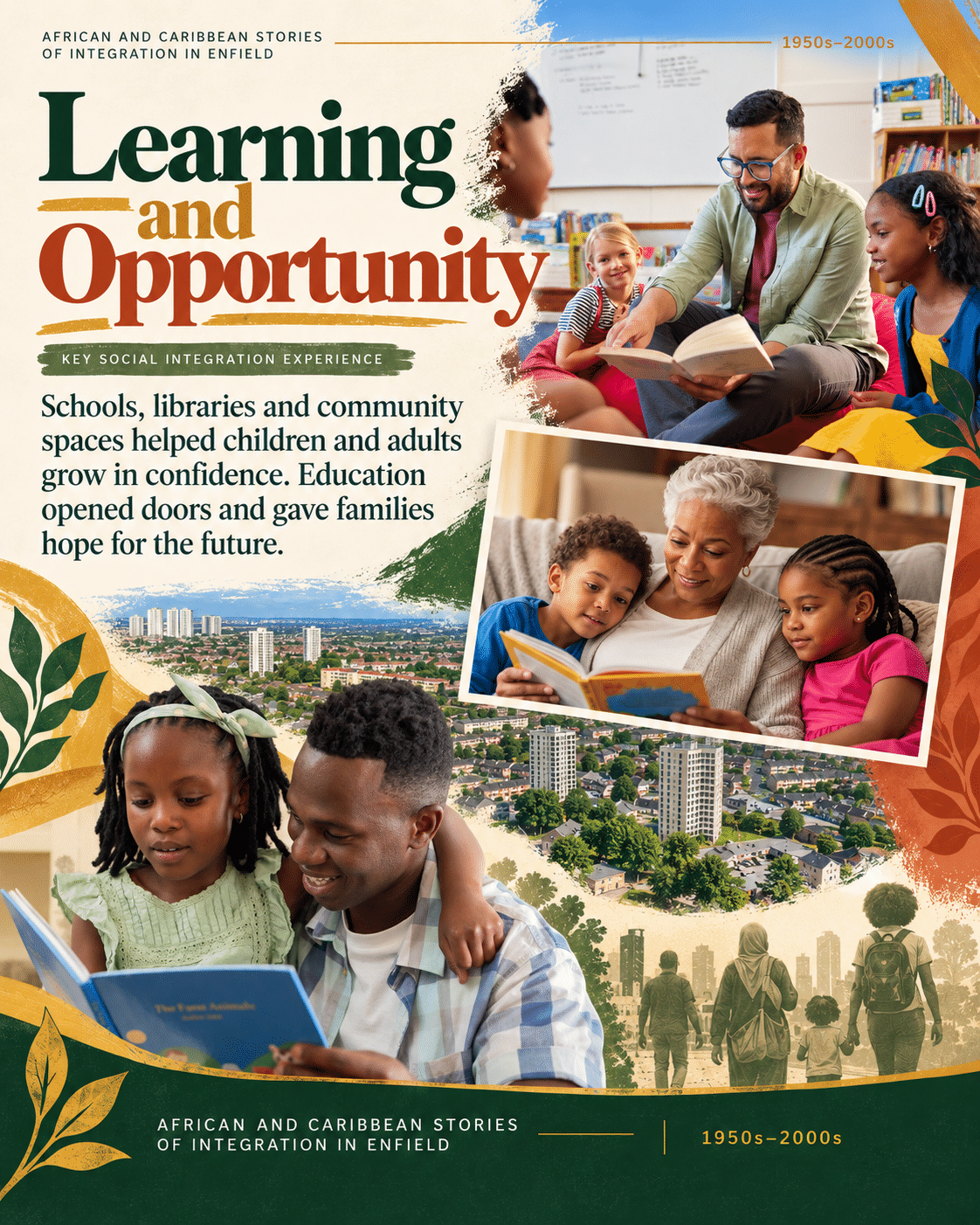
Finding accommodation, securing employment and accessing education were important parts of establishing new lives.
Participants will share the opportunities they found, the challenges they encountered and the support they received from relatives, friends, employers and community networks.
Participants will share the opportunities they found, the challenges they encountered and the support they received from relatives, friends, employers and community networks.
Facing Discrimination and Building a Sense of Belonging
Some migrants experienced racial discrimination, social exclusion and unequal treatment.
The project will document these experiences alongside stories of determination, achievement, solidarity and friendship.
It will also explore how experiences of acceptance, integration and belonging have changed between generations.
Maintaining Family and Cultural Identity
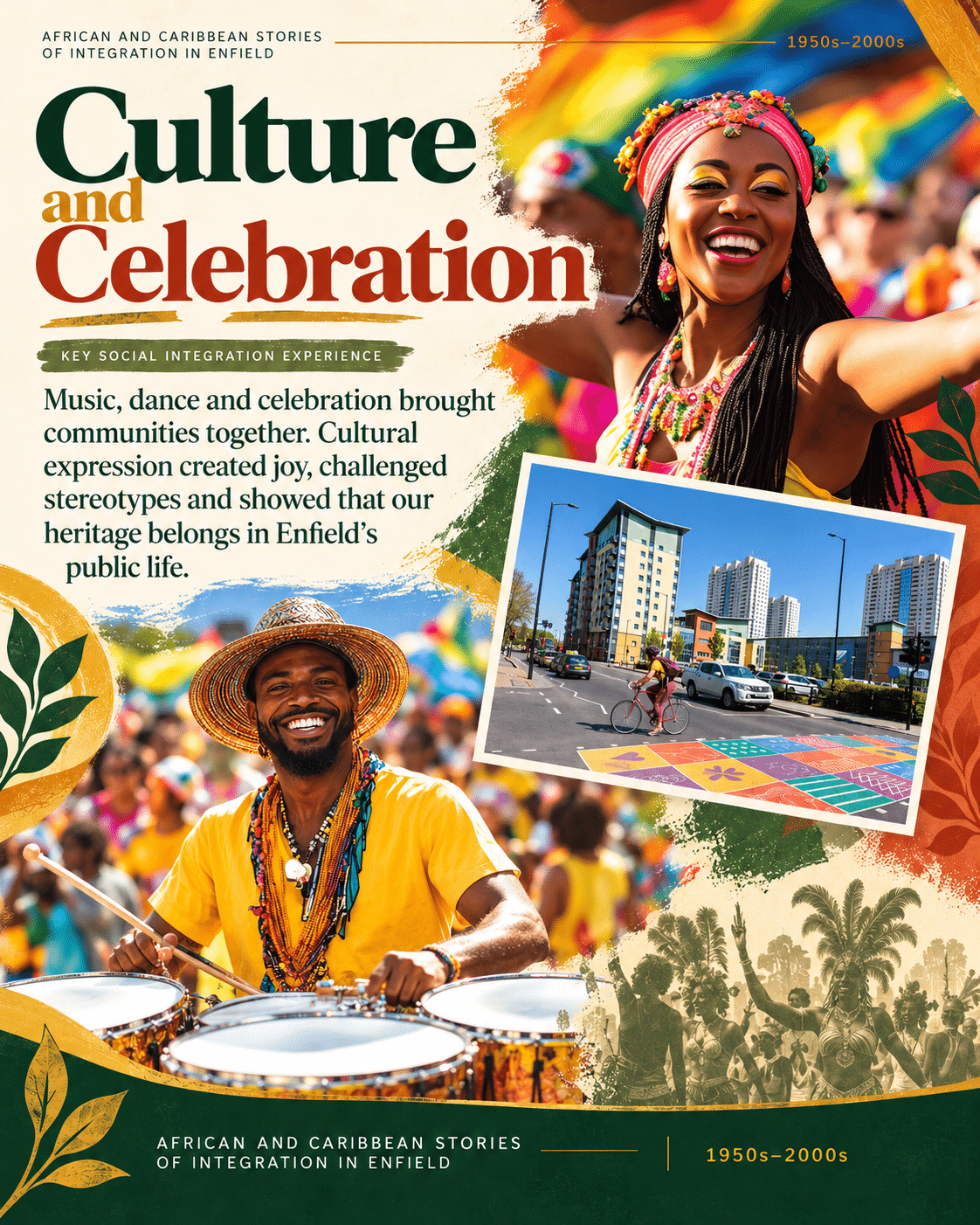
Migration often involves adapting to a new society while maintaining connections to one’s cultural heritage.
Participants will explain how they preserved languages, faith practices, food traditions, family values and customs while raising children in Britain.
The project will also explore how younger generations understand their African, Caribbean and British identities.
Contributing to Enfield’s Social and Economic Life
African and Caribbean residents have contributed to many areas of local life, including healthcare, education, business, public services, faith organisations and voluntary activities.
The project will document these contributions through personal accounts, photographs and available historical materials.
Passing Knowledge to Future Generations
Older residents hold valuable knowledge about migration, settlement and community development.
Their experiences can help younger generations understand the past, recognise the achievements of earlier generations and reflect on the challenges and opportunities associated with integration.
The project will create opportunities for this knowledge to be shared, discussed and preserved.
Five Activities Will Bring These Stories to the Public
Over ten months, Diversity Rights plans to deliver five main heritage activities and produce resources that will remain accessible beyond the project’s delivery period.
1. Twenty Oral History Interviews
The project will conduct 20 audio-recorded interviews with African and Caribbean residents, particularly older people who have first-hand memories of migration and settlement.
These interviews will form the foundation for the project’s publications, podcasts, exhibitions and heritage resources.
Each interview will take place in a supportive setting, with informed consent and appropriate arrangements to protect participants’ privacy.
2. A 25-Page Illustrated Community Heritage E-Book
An illustrated 25-page e-book will bring together selected migration stories, personal experiences, photographs and key themes emerging from the interviews.
The publication will be available online, with 300 printed copies planned for distribution to participants, libraries and community heritage organisations.
3. A Two-Part Podcast and Video Series
The project will produce two podcast and video episodes of approximately 30 minutes each.
The series will feature selected oral history recordings and discussions exploring migration journeys, cultural identity, community contributions and the changing meaning of integration.
The episodes will be published online, including through YouTube, to reach people who cannot attend exhibitions or community events.
4. Exhibitions at Fore Street and Edmonton Green Libraries
Community heritage exhibitions are planned at Fore Street Library and Edmonton Green Library.
They will feature selected personal stories, photographs, quotations and historical materials, enabling visitors to explore the experiences and contributions of African and Caribbean communities in Enfield.
Each venue is expected to host the exhibition for approximately 30 days.
5. An Intergenerational Storytelling Workshop
A storytelling workshop will bring older and younger residents together to exchange experiences, ask questions and explore how migration and integration have changed across generations.
Accessible participation arrangements, including in-person or hybrid opportunities where feasible, will be considered so that people who are less confident using digital technology are not unnecessarily excluded.

Explore Our Stories and Heritage Resources
As the project develops, this page will become a central place for accessing the heritage resources produced through interviews, community activities and historical research.
Visitors will be able to explore:
- Migration Stories: Personal accounts of arriving in Britain, settling in Enfield and establishing new lives.
- Oral History Recordings: Selected interviews capturing participants’ experiences in their own voices.
- Photographs and Historical Documents: Images, letters and other materials illustrating family histories and community development.
- Podcasts and Videos: Recorded conversations exploring migration, integration, identity and community contributions.
- Community Heritage E-Book: A digital publication bringing together selected stories and historical themes.
- Exhibitions and Events: Information about exhibitions, storytelling workshops and other community activities.
These resources will be added as they become available, providing information for residents, schools, researchers and anyone interested in Enfield’s multicultural history.
Who Can Take Part?
The project welcomes people of African and Caribbean heritage who have relevant experiences of migration, settlement or family life in Enfield.
We particularly encourage older residents who migrated to Britain between the 1950s and 2000s to share their memories.
Younger people, family members, volunteers, schools and community organisations can also participate in suitable project activities.
Although outreach will focus particularly on Edmonton and Ponders End, eligible participants from across the London Borough of Enfield are welcome.
Five Ways to Get Involved
Share Your Story
If you or a family member have memories of African or Caribbean migration and settlement in Enfield, we would welcome the opportunity to hear from you.
Your experiences could help preserve an important part of the borough’s history.
Volunteer With Us
Volunteers can support community outreach, oral history activities, heritage documentation and exhibitions.
Appropriate training and guidance will be provided.
Contribute Photographs and Historical Documents
Photographs, letters, documents and other historical materials can help illustrate migration experiences and changes in community life.
Contributions will be handled with appropriate permissions and agreements.
Attend Community Events
Residents will be invited to participate in storytelling activities, exhibitions and other heritage events as dates are confirmed.
Help Us Reach Older Residents
Families, community associations, faith organisations and local groups can help connect us with older residents whose experiences might otherwise remain undocumented.

Preserving Oral Histories for Future Generations
Preserving oral history involves more than recording interviews. It also means protecting recordings, documenting their historical context, obtaining appropriate permissions and ensuring that heritage materials remain accessible in the future.
Diversity Rights will organise and store the project’s audio recordings, transcripts, photographs and publications using appropriate heritage documentation and preservation practices.
We will explore long-term archival arrangements with local heritage institutions, including Museum Enfield, Enfield Libraries and relevant archive services.
Any permanent deposit arrangements will be confirmed through appropriate agreements.
Participants will receive information about how their interviews may be recorded, used, published or archived. They will be able to discuss privacy preferences and proposed access restrictions during the consent process, including any limitations that may apply once material has been published or deposited.
The project aims to engage more than 300 participants and reach over 3,500 people through community activities, exhibitions and online resources.
Progress against these targets will be reported as the project develops.
These Stories Help Explain How Enfield Became the Borough It Is Today
Migration is about more than moving between countries. It involves creating a home, building relationships, maintaining cultural connections, adapting to change and contributing to society.
The experiences of African and Caribbean residents provide valuable insights into how Enfield has changed and how different generations have experienced integration.
Preserving these stories can help strengthen understanding between communities, recognise contributions that may have been overlooked and provide learning opportunities for younger generations.
The project also aims to create a lasting local heritage resource for schools, community organisations, researchers and residents interested in migration, cultural identity and social integration.
About Diversity Rights
Diversity Rights is an Enfield-based registered charity (charity number 1098916), established in 2002.
We work to promote equality, social inclusion, community participation and understanding between people from different backgrounds.
Our previous heritage work includes projects exploring African Traditional Healing and Edmonton Community Languages, supported by the National Lottery Heritage Fund.
The African and Caribbean Stories of Integration in Enfield project builds on this experience to preserve the memories, contributions and cultural heritage of communities that have helped shape the borough.
Frequently Asked Questions
What is the African and Caribbean Stories of Integration in Enfield project?
It is a community heritage project documenting the migration, settlement and integration experiences of African and Caribbean people who settled in Enfield between the 1950s and 2000s. The project will share selected stories through an e-book, podcasts, videos and library exhibitions.
Who was the Windrush generation?
The Windrush generation is commonly associated with people who migrated from the Caribbean to Britain during the post-war decades, particularly from 1948 to the early 1970s. The name comes from HMT Empire Windrush, which arrived at Tilbury in June 1948. The government’s Windrush Scheme has broader eligibility, including qualifying people from African and other Commonwealth countries.
Why is it important to record migration stories?
Oral histories preserve personal experiences that may be missing from official historical records. They help future generations understand the challenges, achievements and contributions of people who migrated to Britain.
How were African and Caribbean migration experiences different?
African and Caribbean migration took place in different historical, political and legal circumstances. The project will examine these differences alongside shared experiences of settlement, discrimination, cultural identity, community support and belonging.
Who can share their story?
People of African or Caribbean heritage with relevant migration or settlement experiences in Enfield are encouraged to participate. Older residents with first-hand memories of earlier decades are particularly welcome.
What happens during an oral history interview?
An interviewer invites a participant to describe their memories and experiences in their own words. The conversation is recorded with informed consent, and its use in publications, exhibitions or archives will be governed by agreed permissions.
Where will the stories be available?
Selected stories will be shared through the project’s e-book, podcast and video series, library exhibitions and online heritage resources. Long-term archive access arrangements will be confirmed as the project develops.
How can I volunteer or get involved?
You can participate by sharing your migration story, volunteering, contributing historical materials or attending community heritage events. Please use the contact details provided on the Diversity Rights website to express your interest.


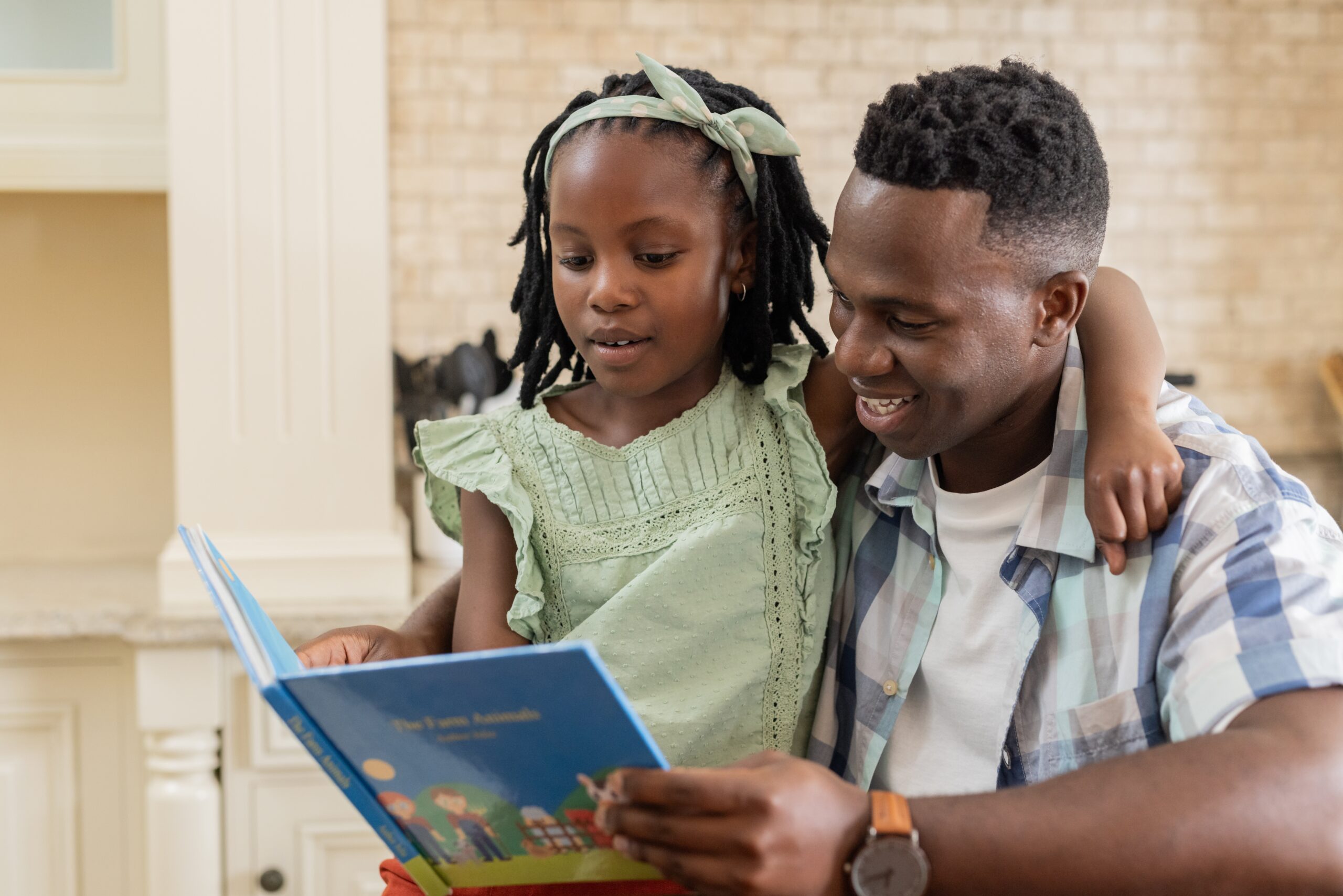
Help Preserve Enfield's African and Caribbean Heritage
Every story contributes to our understanding of Enfield’s history.
By sharing your experiences or supporting the project, you can help ensure that the memories, achievements and contributions of African and Caribbean communities are recognised and preserved for future generations.
Interested in participating?
We welcome residents who wish to share their stories, volunteer, contribute photographs or historical documents, or support community heritage activities.
Please get in touch with Diversity Rights using the contact information available on our website.
Funding Acknowledgement
This project is funded by Enfield Voluntary Action with funding from the Heritage Fund.
Diversity Rights thanks both organisations for supporting the preservation of Enfield’s African and Caribbean heritage.